
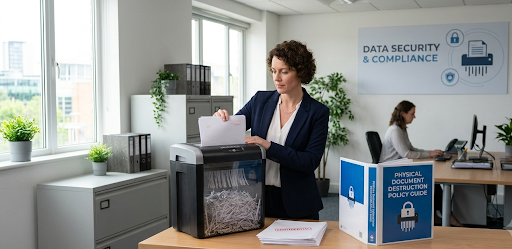
Did you know that physical paper still causes many Australian data breaches? Many businesses focus solely on digital threats. However, paper records can easily fall into the wrong hands. For this reason, your business needs a robust physical document destruction policy. This framework secures your sensitive information from the moment of creation to its final disposal.
To begin your security journey, you can book a complementary cyber security workshop with Sentry. This workshop helps identify vulnerabilities in your organisation. After all, physical security is just as crucial as digital security. Let us explore how you can create a safe disposal system today.
What is a Physical Document Destruction Policy?
Simply put, this physical document destruction policy sets clear rules for destroying paper records. It ensures that staff do not simply toss confidential documents into standard recycling bins. Instead, the policy mandates secure, irreversible destruction methods.
Furthermore, a physical document destruction policy aligns your business with strict regulatory requirements. It protects your clients, employees, and brand reputation. Without these guidelines, your staff might accidentally expose private financial data or proprietary plans.
Consequently, a physical document destruction policy minimises your attack surface. You can learn more about managing these risks by reading our guide on cybersecurity policies for SMBs. This resource helps you build a solid foundation for overall business protection.
Why Your Organisation Needs a Physical Document
Destruction Policy
First, regulatory standards in Australia demand strict data protection. For instance, the Australian Privacy Principles require organisations to destroy personal information securely. If you fail to do so, your business could face severe financial penalties.
Moreover, many small businesses are now targeting specific certifications. The SMB1001 cyber security certification provides a clear pathway for growing organisations. Specifically, the SMB1001 Gold tier requires a formal physical document destruction policy.
By achieving this certification, you prove your commitment to security. Customers trust certified businesses much more than uncertified competitors. Therefore, implementing this policy is a smart strategic move for your brand.
Document Classification and How to Classify Your
Files
To start, you must categorise your paper records. Not all files require the same level of security. However, treating all documents as confidential is a safe default.
Generally, businesses split information into three main categories:
- Public information: This includes marketing brochures and public press releases.
- Sensitive information: This covers internal memos and basic business plans.
- Confidential information: This includes payroll records, medical data, and client financial details.
First, never toss client contracts into standard waste bins. You must secure them immediately. Fortunately, our compliance and certification services can guide you through proper data classification processes.
Approved Destruction Methods for Australian
Businesses
First, secure shredding remains the most common method. However, you must use cross-cut shredders. Strip-cut shredders leave long paper strips that thieves can easily piece back together. Therefore, cross-cut shredding is the industry standard.
Alternatively, pulping is a highly effective option. This process mixes paper with water and chemicals to break down the fibres. As a result, the document becomes entirely unrecoverable. Many professional destruction services use this method.
Importantly, some industries still use burning or incineration. However, this method requires special permits in Australia due to environmental regulations. Therefore, you should rely on professional shredding or pulping services instead.
The Step-by-Step Secure Disposal Process
To begin, your staff must collect all sensitive papers. They should place these documents into locked, secure bins. These bins must remain locked at all times. This prevents unauthorised staff or visitors from viewing the documents.
Next, you must arrange for secure transportation. Do not let employees transport confidential waste in their personal vehicles. Instead, hire an approved third-party document destruction company. These specialists transport the bins in secure, GPS-tracked vehicles.
Finally, the destruction company must provide a Certificate of Destruction. This document serves as legal proof of secure disposal. Consequently, you must retain these certificates for your compliance audits. We recommend keeping them for at least seven years.
For extra peace of mind, you can combine this with our cyber security monitoring services. We help you track both physical and digital security incidents in real time.
Handling Digital Media and Hardware Destruction
In addition to paper, your policy should cover digital media. Old hard drives, USB sticks, and CDs also contain sensitive data. Simply deleting the files is not enough. Thieves can easily recover deleted data using basic software tools.
Therefore, physical destruction is the only safe option for digital hardware. You must crush, degauss, or shred these devices. For instance, specialised shredding machines can grind hard drives into tiny metal pieces.
If you want to evaluate your hardware security risks, consider a professional security assessment. Sentry offers comprehensive assessments to identify gaps in your physical and digital infrastructure.
Employee Training and Awareness
Clearly, a policy is only useful if your staff actually follow it. Many security breaches happen because of human error. For example, an employee might leave a printed client report on their desk overnight.
Therefore, regular training is essential for your team. You must teach staff how to identify sensitive documents. They should also learn how to use the secure disposal bins correctly.
Fortunately, Sentry provides tailored cyber awareness training for teams of all sizes. This training helps build a strong security culture within your organisation. Consequently, your staff will become your strongest line of defence.
Managing Third-Party Destruction Vendors
First, you must vet any third-party shredding vendors carefully. Do not just hire the cheapest local service. Specifically, look for providers with national security certifications. In Australia, NAID AAA certification is the gold standard for secure destruction.
In addition, ensure the vendor provides a clear chain of custody. They should log every step of the process. This includes collection, transportation, and final destruction.
Therefore, your physical document destruction policy must name the approved vendors. It should also outline the contract review schedule. You should review vendor compliance annually to maintain high security standards.
Integrating Physical Security with Your Digital
Defence
Indeed, physical security and digital security go hand in hand. If you digitise your paper records, you must protect those digital files. For example, scanned documents stored in Google Workspace need strong access controls.
However, many businesses neglect cloud security after moving away from paper. To solve this, we offer Google Workspace security services to protect your digital assets. We ensure your cloud environment is just as secure as your locked shredding bins.
Additionally, you should implement reliable cloud backups. In case of a digital incident, you can recover your files quickly. Check out our Google Workspace backups service to secure your cloud data today.
Writing and Implementing Your Policy
First, assign a policy owner in your organisation. This is usually the Office Manager or compliance officer. They will oversee the secure bins and manage vendor relationships.
Second, download a professional template to save time. You can use our Free Google Workspace Security Playbook to understand overall policy frameworks. This resource helps you structure your compliance documents easily.
Third, run a pilot test of the new disposal process. Place secure bins in high-traffic areas like print rooms. Monitor how well your staff use them for a week.
Finally, officially launch the policy with a team-wide meeting. Explain the purpose of the new physical document destruction policy clearly. Consequently, this keeps everyone on the same page from day one.
Frequently Asked Questions about Secure
Destruction
What is a Certificate of Destruction?
A Certificate of Destruction is a formal document provided by your shredding vendor. Specifically, it proves that your documents were securely destroyed. It includes the date, location, and destruction method. Therefore, you must save this certificate for compliance audits.
How long should we keep physical documents before destroying them?
This depends on your industry and local laws. For instance, Australian tax laws require businesses to keep financial records for seven years. Therefore, you must check regulatory guidelines before destroying any financial files.
Can we use office shredders instead of a third-party vendor?
Yes, but you must use cross-cut shredders. However, office shredders are slow and inefficient for large volumes. Professional vendors save time and offer better security. Consequently, most SMBs prefer to use certified third-party services.
Does SMB1001 require a physical document destruction policy?
Yes, the SMB1001 Gold tier requires clear rules for physical data disposal. This policy proves that you protect data throughout its entire lifecycle. You can read our detailed SMB1001 cyber certification guide to learn more about these requirements.
Conclusion and Action Steps
In conclusion, protecting your business requires more than just firewalls and passwords. A physical document destruction policy is a critical shield against paper-based data breaches. By implementing these clear disposal steps, you keep your client data safe and satisfy Australian compliance standards.
Therefore, do not wait for a physical data breach to occur. Start building your secure disposal strategy today. You can consult with our team for professional security consulting services. We will help you secure your physical offices and digital workflows.