
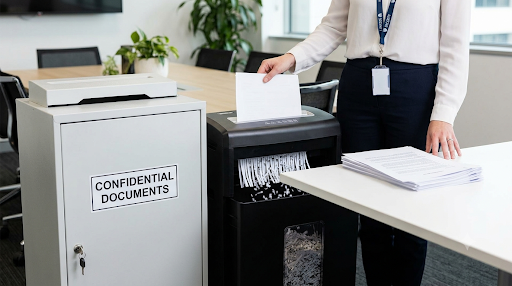
In today’s digital age, we must still protect our paper trail. A physical data breach can damage your organisation as severely as a digital hack. This risk highlights the critical nature of a defined Physical Document Destruction Policy. Many small businesses in Australia often overlook this essential control. It’s not just good practice; it is fundamental to achieving certifications like SMB1001, ISO 27001, PCI DSS, OSC2, NIST Cyber Security Framework (CSF). This post explains why this policy matters and how to implement it effectively. We’ve even created a free template you can download and customise.
WHY A PHYSICAL DOCUMENT DESTRUCTION POLICY
IS CRITICAL FOR BUSINESS COMPLIANCE
Do you leave sensitive documents lying around on desks or near printers? This creates a massive security risk. Your business likely handles private data, from client contracts to employee payroll details. If this information isn’t disposed of securely, it can be easily stolen. This can lead to identity theft and regulatory penalties.
Australian organisations have a legal obligation to protect personal information under the Privacy Act. Negligent disposal could lead to significant fines and a loss of client trust.
Furthermore, physical security is often the starting point for attackers. By implementing a policy, you show your clients that you take data protection seriously across all forms. This aligns directly with compliance efforts. For example, if you are moving toward SMB1001 certification, robust physical security controls are necessary to move from Silver to Gold status. Read our guide to SMB1001 cyber certification to see how these requirements fit together.
KEY ELEMENTS OF AN EFFECTIVE PHYSICAL
DOCUMENT DESTRUCTION POLICY
Your physical destruction policy shouldn’t be complicated. It must, however, be comprehensive. A good policy will address:
WHAT NEEDS TO BE DESTROYED
First, you must clearly define what constitutes confidential information. Consider any document that contains personal data or sensitive business details. This includes invoices, HR records, and meeting minutes. Refer to our complimentary workshop to identify vulnerabilities including how physical data is classified.
SECURE COLLECTION PROCESS
When a document reaches the end of its life, it needs to be stored securely before destruction. This is often where things go wrong. Documents can sit in open recycling bins for weeks. Your policy should mandate the use of lockable, tamper-proof security containers situated conveniently throughout the office.
DESTRUCTION METHODS AND FREQUENCY
Next, you must specify how documents are destroyed. For truly sensitive data, simply shredding is rarely sufficient. A reliable cross-cut or micro-cut shredder is the standard for securely reducing physical information to an unreadable state. You should also define how often the containers are emptied and documents destroyed. Regular, scheduled destruction is crucial for preventing a dangerous backlog of sensitive information. Our penetration testing services often reveal how poor physical security leaves businesses vulnerable to data extraction, even when their digital walls are strong.
CHAIN OF CUSTODY
If you use an external shredding service, a secure chain of custody is vital. This provides a documented audit trail. You know who handled your sensitive data, when, and how. We’ve seen businesses face significant risk when physical documentation leaves the building without this formal process. You must require a certificate of destruction from your provider for your compliance records.
For your convenience, we have created a Free Physical Document Destruction Policy Template. This document lists all key items business owners must consider when developing this policy. Simply download, edit, and tailor it to suit your specific organisation’s operations.
IMPLEMENTATION: MOVING BEYOND A DOCUMENT
IN A GOOGLE DRIVE FOLDER
Having a policy is great, but it is useless if it just sits unused in your Google Drive. To be effective, the policy must become part of your organisation’s culture. Here is how you can put it into action.
INTEGRATE WITH STAFF TRAINING
The best policy will fail without proper training. You must educate your staff on the risks and how to follow the destruction procedures correctly. Sentry’s cyber awareness training covers these risks comprehensively. When your team understands the ‘why’ behind the policy, they are more likely to comply with it. You can learn more about how we build robust security cultures here: https://sentry.cy/cyber_security_training/
ESTABLISH REQUISITE INFRASTRUCTURE
Make it easy for employees to do the right thing. Place secure collection bins and cross-cut shredders in convenient locations, especially near printers and photocopy machines. If people have to walk across the office to use a lockable bin, they might just use the nearest open recycling container instead.
REGULAR REVIEWS AND AUDITS
Your business changes, and your policy must keep pace. Review it annually, and whenever a major change occurs (like moving offices or implementing new data services). We recommend conducting regular internal audits. Simply walk around and check for confidential information left unattended on desks. These quick spot-checks are effective for reinforcing good habits. This is a crucial element of preparing for our security consulting assessments.
COMPLEMENTARY POLICIES: VISITOR REGISTERS AND INVOICE
FRAUD
A Physical Document Destruction Policy doesn’t stand alone. It is one part of your overall physical and data security ecosystem. For example, you also need to manage who enters your building. Review our advice on maintaining a secure Visitor Register as part of the SMB1001 requirements.
Furthermore, how your team physically processes financial documents affects your fraud risk. Protecting invoice data is critical. We recently discussed how to prevent invoice fraud by controlling payment redirection scams. Robust document disposal is a key, often overlooked, preventative control in this area.
CONCLUSION
Implementing a robust Physical Document Destruction Policy is vital for securing your business. It protects sensitive data from falling into the wrong hands and is crucial for maintaining compliance with regulations like the Australian Privacy Act. Furthermore, it’s a necessary step towards achieving SMB1001 Gold 2026 certification as well as other cyber security certifications. Don’t let your valuable policy sit unused in a Google Drive folder. By training your staff and conducting regular reviews, you can ensure physical security becomes an active part of your operations.
Physical Document Destruction Policy FAQs
How does physical document security impact overall data compliance for small businesses?
It is often overlooked, but negligent physical document disposal is a major data breach risk. Compliance frameworks like SMB1001, ISO27001, SOC2, NIST CSF and regulations like the Australian Privacy Act require all personal data, in any format, to be destroyed securely. Failure to do so can lead to massive regulatory fines and irreparable reputation damage. It shows clients you are dedicated to security in every aspect of your operations.
How do physical data security controls link to SMB1001 Gold?
SMB1001 Silver focus is primarily on digital controls, but physical security becomes a key requirement for progressing to the SMB1001 Gold standard. A formal Physical Document Destruction Policy, alongside other complementary controls like maintaining a visitor register, is essential to demonstrate you have identified and are actively managing all points where sensitive information might leak.
What is the most secure method for physical data destruction?
Simply ripping paper is insufficient. Your policy should mandate the use of cross-cut or micro-cut shredders that reduce documents to unreadable, irregular particles. If using an external shredding service, you must ensure a full chain of custody and require a formal certificate of destruction for your records. This provides a clear audit trail.